FiveM server setup
From an empty box to a server people can actually join. Framework, database, permissions, backups and the hosting choices that decide how it performs.
A FiveM server is a Linux box, a database and a few hundred resources that all assume they are the only thing running. Getting that stable is mostly decisions made early: which framework, where MySQL lives, what happens when the box reboots at 4am.
My previous server ran on dedicated hardware I administered myself, with a local MySQL instance and OS tuning for the way FiveM uses CPU. Freedom Roleplay, the server I run now, adds a separate development server and a release tool that puts tested changes live with a backup and a rollback. That is the setup I build for other people: not the cheapest shared box, but one where the bottleneck is your scripts and not your neighbours.
What gets set up
- Framework install and configuration: Qbox with the ox stack, ESX Legacy, or standalone if that is what your concept needs.
- MySQL on the same machine where it belongs, with the schema, users and a backup that has actually been restored once.
- txAdmin, with recipes, scheduled restarts and admin accounts that are not all the owner.
- A separate development server and a release routine, so changes are tested before players see them and every release can be rolled back.
- Permissions and ACE rules, so staff powers are a config decision instead of a hardcoded identifier list.
- Cloudflare or reverse proxy in front of anything web-facing, with HTTPS.
Hosting choices, honestly
- Dedicated hardware beats a shared VPS once you pass roughly forty concurrent players. Below that a good VPS is fine.
- Local MySQL over a remote database. Query latency is the single easiest performance win on a busy server.
- OS tuning for FiveM workloads, because the defaults assume a web server and not one heavy single-threaded process.
- Backups off the machine. A backup on the same disk is not a backup.
Handover
- A written setup document: what runs where, which ports, which credentials go in which file.
- Restart, update and restore steps you can follow without me.
- One week of free support after handover.
Built on Freedom Roleplay
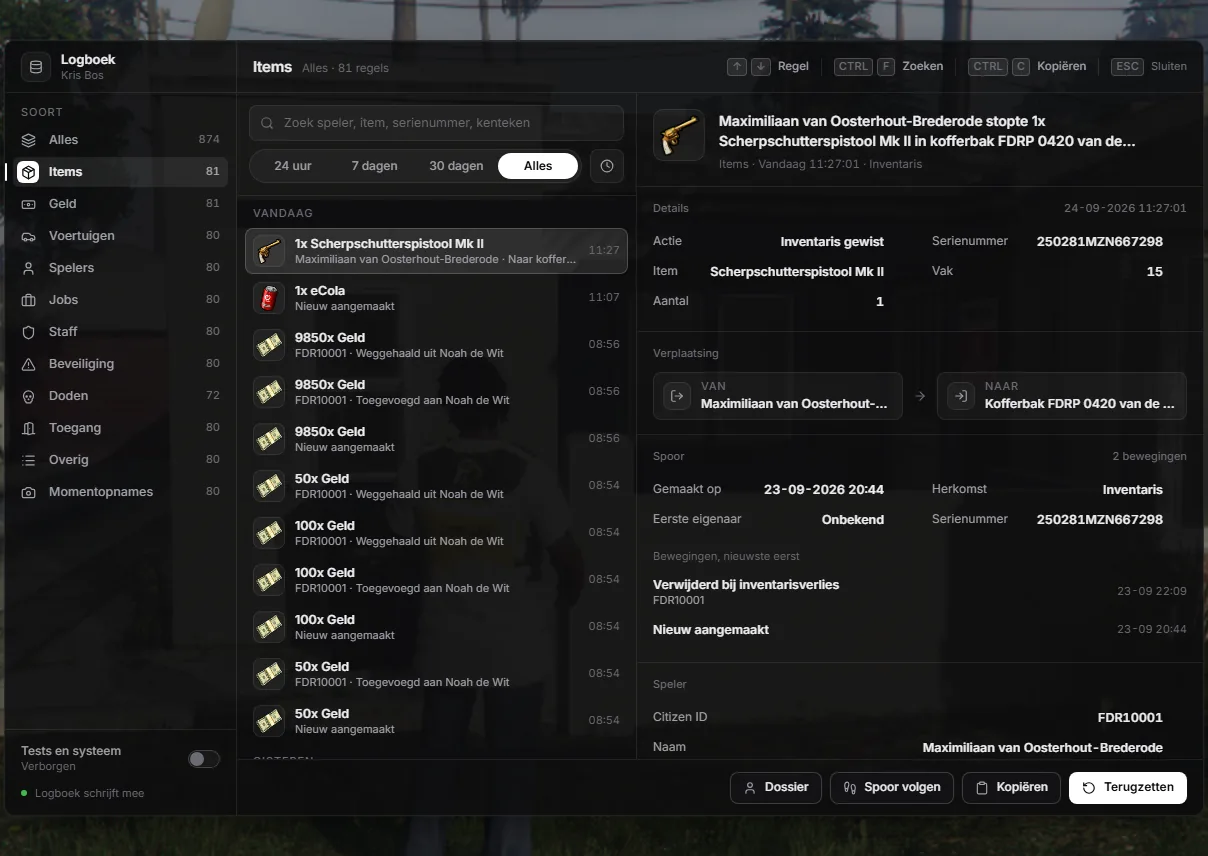 PLATFORM / STAFF
Server operations
The back office behind the server: every item and euro logged, staff questions answered from the logs, refunds from evidence and a release tool between test and live.
Read the case ↗
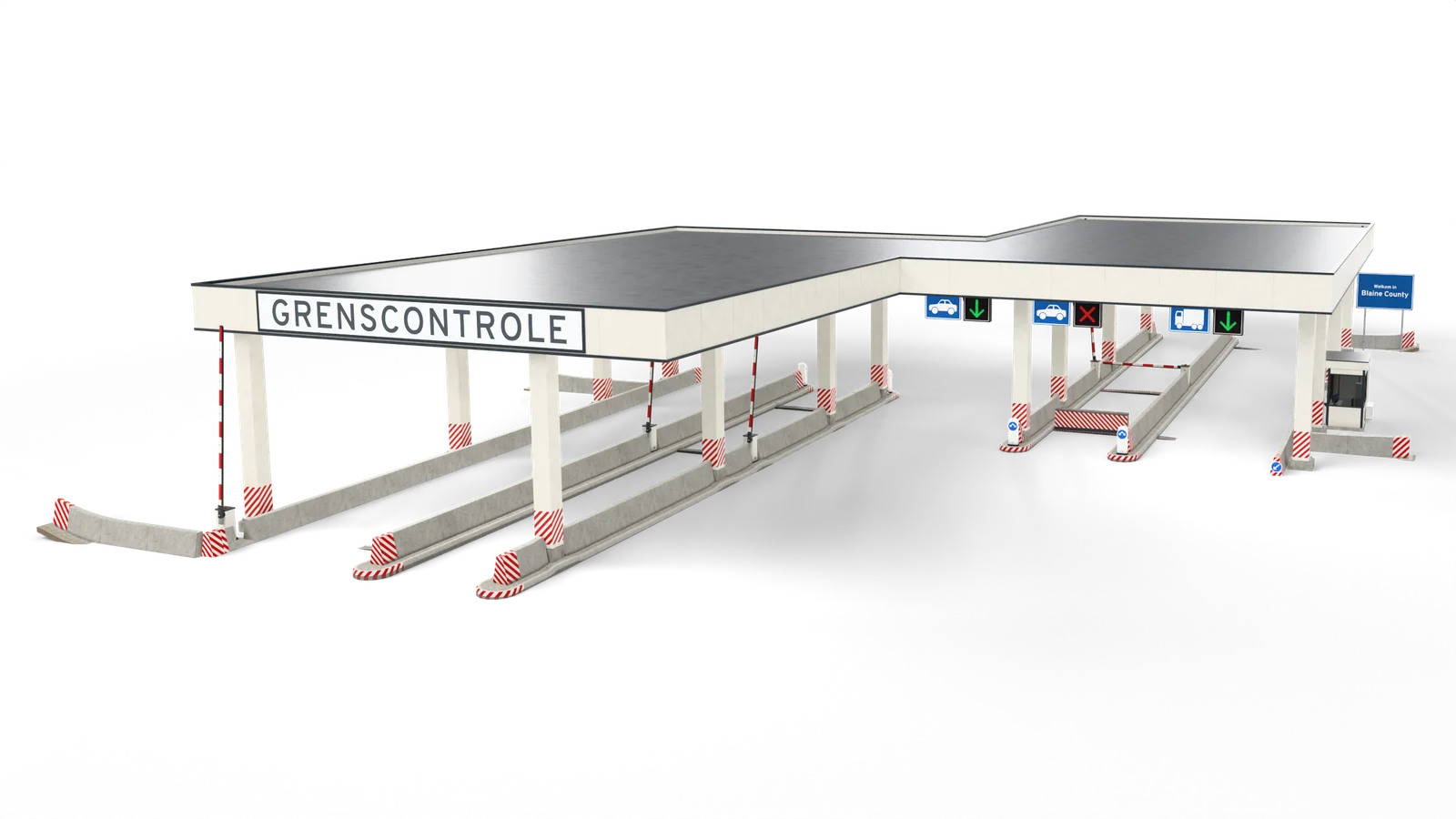 POLICE / BORDERS
Border control
Sixteen custom-built border posts close every road between the city and the county: inspection lanes with road blockers, barriers and spikes that police run lane by lane, and fixed ANPR into MEOS.
Read the case ↗
Questions about this
What does a server setup cost?
A complete setup on Qbox and ox, with txAdmin, the database, permissions and backups, gets a fixed quote once I know your framework, player count and what has to carry over. Taking over a server that is already running gets a fixed quote after I have looked at it.
Do I need dedicated hardware or is a VPS enough?
A VPS is fine up to roughly forty concurrent players if the host does not oversell. Above that, shared CPU shows up as stutter during busy moments and no amount of script tuning fixes it. I will tell you which side of that line your plan sits on before you buy anything.
Can you take over a server that is already running?
Yes. I go through what is installed, what it costs in resmon and what is going to break next, and give you a written list before touching anything.
Do you host the server for me?
No. You own the hosting account and the hardware, so you are never locked to me. I set it up, document it and hand you the keys.
Do you set up a development server next to the live one?
Yes, that is part of the setup, with a release routine. On Freedom Roleplay every change is built on a separate development server first and goes live through one release tool that backs up what it replaces and can roll it back. The server operations case shows how.
Which framework should a new server use?
For most new servers, Qbox with the ox stack: it runs almost all QBCore scripts and is what Freedom Roleplay runs on. ESX Legacy makes sense when the scripts you need are written for ESX. The guide on Qbox, QBCore or ESX goes through the trade-offs.
Want this on your server?